



For novelists of Westerns, Cormac McCarthy transcended — and reinvented — the genre
Entertainment
For novelists of Westerns, Cormac McCarthy transcended — and reinvented — the genre
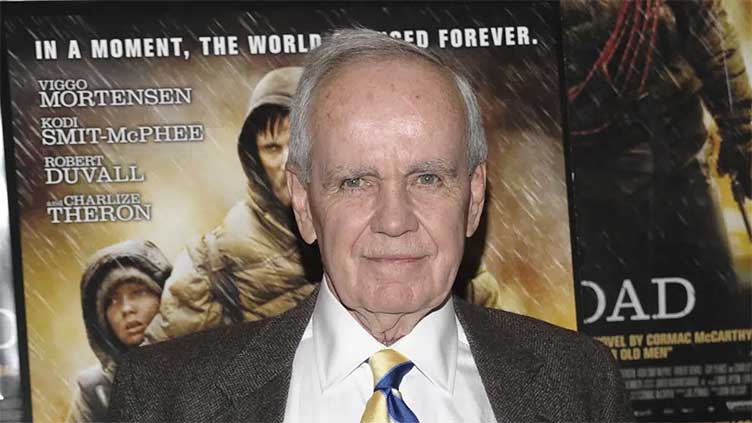
NEW YORK (AP) — From the moment he read Cormac McCarthy’s “All the Pretty Horses,” James Wade knew he was a fan for life and that his aspirations, as an author of Westerns, would never be the same.
“He really broke free from the traditional Western,” says Wade, a two-time winner of the Spur Award for outstanding Western writing whose novel “All Things Left Wild” was billed as “an illustration of the violence and corruption prevalent in our fast-expanding country” — a description that could have been applied to much of McCarthy’s work.
“He included all those elements from traditional Westerns, like cowboys and horses, but he also almost single-handedly brought the Western into the literary realm,” Wade said. “As Western writers we can now take chances on more metaphysical topics, and not just heroes and villains.”
McCarthy , who died this week at 89, has been widely praised as a descendant of William Faulkner and Herman Melville, among others, excavators of the American spirit whose biblically influenced prose raised their narratives to tragic and poetic heights. His admirers can be found throughout the literary world and beyond, from such prize-winning fiction writers as Colson Whitehead and Rachel Kushner to actor Tommy Lee Jones and the Coen Brothers, who faithfully adapted his “No Country for Old Men” into an Oscar-winning movie.
“It’s like he was writing meta-Westerns,” says Kushner, author of “The Flamethrowers” and other novels. “He writes about people gripped by existential compulsion, who don’t know why they do the things they do.”
“He was so fiercely dedicated to his own vision that he gave you permission to pursue yours,” says Whitehead, whose books include the Pulitzer Prize-winning “The Underground Railroad” and “Zero One,” a zombie apocalypse inspired in part by McCarthy’s “The Road,” winner of the Pulitzer in 2007. “I read ‘The Road’ and thought, ‘If Cormac can do “Mad Max,” I can do “Night of the Living Dead.”
For novelists of Westerns, he holds the kind of stature John le Carré has among spy novelists — as a master in the field whose work also transcended, and even reinvented it. The Western, a genre some feared was outdated, seemed new again. Authors remember encountering his work, from his Border Trilogy to “The Road” and “Blood Meridian,” as exhilarating and sometimes intimidating.
“Most critics focus on his majestic, resplendent prose, but I see McCarthy’s influence on the genre to be his alternative mythology of the West, his aesthetic vision, and the detached, dispassionate presentation of the brutal violence that was (and is) a part of the Western frontier,” he says. “Whenever my own work is criticized for being overly violent, I recommend readers check out some of McCarthy’s later work.”
Kathleen Morris, whose novels include “Lily of the West,” also read “Blood Meridian” years ago and remembered being “awed” and “slightly terrified” by his prose and his storylines. McCarthy became a kind of literary conscience, an author she would find herself summoning — “What would the man think of that?” — while working on her own books.
Like Weiden and Morris, author Rudy Ruiz didn’t immediately find McCarthy pleasurable or even understandable. He would end up rereading the same page multiple times, making sure he hadn’t missed something, and thought the despair and the loneliness of McCarthy’s books “made them hard sometimes to engage with.”
